







How to Choose the Right Material for Custom Stickers
Share
Stickers are one of the easiest types of custom merchandise to bring to market. They are lightweight, inexpensive to ship, ideal as packaging inserts, and useful for artists testing a new character or collection. Feystar offers standard vinyl, clear, holographic, glitter, prismatic, brushed gold and silver, and mirror finishes. The real challenge is not finding an available material, but matching that material to the intended use and the visual style of the artwork.
Start with this quick comparison
|
Goal |
Recommended material |
Design priority |
|
Everyday use, packaging, and outdoor applications |
Vinyl |
Use stable colors and a clear silhouette, with durability as the priority |
|
Blend the background into the surface |
Clear |
Plan white-ink and transparent areas carefully, and avoid low contrast |
|
Create color shifts as the sticker moves |
Holographic |
Keep the focal point simple so important details are not obscured by the pattern |
|
Cute, festive, or sparkling themes |
Glitter |
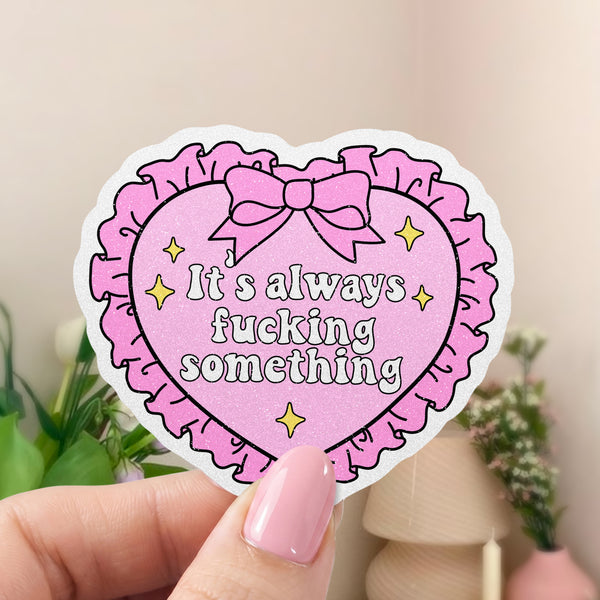
Use sparkle selectively and control the overall visual noise |
|
Premium branding and gift-box packaging |
Brushed Gold / Silver |
Use a clean composition and high-contrast text |
|
Art shows, streetwear, and collectible editions |
Prismatic / Mirror |
Make reflection part of the appeal while preserving legibility |
Vinyl stickers: the most versatile starting point
Standard vinyl stickers work well on packaging, notebooks, water bottles, laptops, refrigerators, and many other everyday surfaces. They offer reliable color reproduction and suit a wide range of artwork, making them a strong default for logo stickers, thank-you stickers, character designs, and the core style in a sticker collection.
Clear stickers: make the surface part of the design
Clear stickers are a good choice for glass, transparent packaging, acrylic, and any application where the texture or color beneath the sticker should remain visible. White ink is an important design consideration: colors printed without a white base appear more translucent, while areas backed with white ink look fuller and more opaque. On a busy or colored surface, use a white underbase or dark outline around important text and key artwork.
Holographic, glitter, and prismatic finishes: turn light into part of the artwork
Holographic and prismatic materials shift as the viewing angle changes, while glitter adds a denser field of sparkle. These finishes suit anime, gaming, idol, holiday, magical, and trend-driven themes, but they work best when the artwork is not overly complex in every area. Let the reflective material support a focal point, such as the eyes, a badge, a star, or a short word, instead of competing with all of the information at once.
Metallic and mirror finishes: closer to premium packaging than an everyday sticker
Brushed gold, brushed silver, and mirror finishes have a distinctly decorative character. They are well suited to gift-box seals, limited-edition numbers, product labels, event invitations, and premium packaging. Use clean shapes, short copy, and generous negative space rather than delicate lines, since metallic reflections can reduce legibility.
Die-cut stickers or sticker sheets: which format should you choose?
· Die-cut stickers: Each sticker is individually cut to the artwork's outline. This format is ideal for a single character, a logo, or individual retail sales.
· Sticker sheets: Multiple designs are arranged on one sheet. This format works well for themed sets, character collections, and package inserts.
· A practical combination: Use a sticker sheet to present the full collection, then offer the best-selling individual character as a die-cut sticker.
Choose by surface and use case
· Water bottles and outdoor gear: Prioritize water and abrasion resistance, and avoid extremely fine edges.
· Product packaging: Consider brand colors, seal placement, and the opening experience before choosing a metallic or clear effect.
· Notebooks and laptops: Character, typography, and collection-based designs work well, especially in multi-design packs.
· Events and conventions: Holographic, glitter, and prismatic materials are more likely to attract attention under venue lighting.
Key requirements for sticker artwork files
1. Use high-resolution artwork; standard print workflows commonly recommend 300 DPI.
2. Keep the background transparent rather than mistaking a white background for transparency.
3. Create a closed cut line and leave a safe margin around text and important artwork.
4. Confirm whether a white-ink layer is needed, especially for clear and metallic materials.
5. Review small text, fine lines, and low-contrast areas at the final printed size.
6. Approve a material sample before setting the color strategy for an entire product range.
Frequently Asked Questions
Do clear stickers completely hide the color underneath?
No. Clear stickers allow the underlying surface to affect the final appearance, so printed colors generally look more translucent. If you want the main artwork to appear richer and more opaque, plan a white-ink underbase for those areas.
Which material is best for packaging?
Standard vinyl works for most packaging. Clear stickers are ideal for glass and transparent bags, while brushed gold, brushed silver, and mirror finishes are better suited to premium or limited-edition packaging.
Can holographic stickers make text harder to read?
Yes. Small type, light colors, and busy reflective patterns can reduce legibility. Use a heavier font and stronger contrast to keep the text clear.
Should I order individual stickers or a full sticker sheet?
Individual stickers are best for standalone sales and logo visibility. Sticker sheets are better for themed collections, gift sets, and increasing the average order value.
Conclusion
The goal of material selection is to make the sticker more useful and visually effective in the real world while keeping it aligned with the brand. Start with vinyl for versatile core products, then use clear, holographic, glitter, or metallic materials to create a memorable collection.